When a business has expenses, it pays out cash either “now” or “later”. If cash is being paid at the time of the purchase, the textbook will specify “paid” to indicate that. If the textbook says “on account”, it means that cash will go out later. When cash will be paid later the account we use to track what the business will be paying later for payroll is Salaries or Wages Payable.
The Recording Process

T-accounts are also your best friend when it comes to tracking journal entries. They make the double-entry system of accounting a breeze. This system, which records every transaction in at least two accounts, ensures that your books are always balanced.
What is a T-Account? Accounting Student Guide

Understanding the perks and uses of T-accounts can seriously boost your business’s financial management skills. For more insights into journal entries https://www.bookstime.com/ and their role in accounting, take a look at our articles on what is a journal and accounting general journal entries. T-accounts are like the Swiss Army knife of accounting. They give you a clear, visual snapshot of each account’s activity.
Contra-liability Accounts
- If cash is being received at the time of the sale, the textbook will specify “received cash” to indicate that.
- The company’s Cash In Bank account reflected a debit balance of $1,300 because the total debit is higher than the total credit.
- The common contra-expense accounts are Purchase Discounts and Purchase Returns and Allowances.
- This also applies to the total debits and total credits of all combined accounts in the general ledger.
- To find the account balance, subtract the total debits from the total credits.
To put it differently, the funds represent the owner’s equity in the business and are recorded in an account called “Owner’s Name, Equity” or “Owner’s Name, Capital”. The funds become a business asset recorded in the company’s books under an account called “Cash”. T-accounts also help manage income statement accounts like revenues, expenses, gains, and losses. Knowing how these entries affect the income statement is crucial for financial analysis. The left side of the T-account is for the left side of the t account is called the debits, and the right side is for credits. In double-entry accounting, debits and credits always need to balance out.
Journal Entry Tracking
The expense account we will use for the retained earnings balance sheet rent we paid is Rent Expense. Accounting textbooks use two accounts with the word “Supplies”– Supplies (an asset), (sometimes called Supplies Asset), and Supplies Expense. Supplies (the asset) works like an inventory account. You hold the supplies in an inventory until they are used. When supplies are used, they are moved from the asset account into the expense account.
- Account title describes the type of asset, liability or equity represented by that account.
- Contra-revenue Accounts are revenue accounts with a normal debit balance, instead of the normal credit balance of typical revenue accounts.
- When closing temporary accounts, you can use a clearing account called the Income and Expense Summary account temporarily hold the account balances of temporary accounts that are being closed.
- When cash will be paid later the account we use to track what the business will be paying later for payroll is Salaries or Wages Payable.
- At the end of the accounting period, the balance of the accounts can either result to a debit balance or a credit balance.
The Ledger Account
This is useful you have an account that has not been used for a long time and if you decide not to use the account anymore. In a computerized accounting system, the software may automatically assign an account number to each account. However in a manual accounting system, the accountant develops a custom numbering system for the company.

Business Insights
- In this case, we received the cash at the time of the sale.
- A solid understanding of T accounts forms the basis for working effectively with bookkeeping services and other accounting practices.
- A Debit Entry is a term used for transaction entries that are recorded on the debit or left side of the T-account.
- All the increases in the business expenses are recorded on the debit (left) side and the decreases on the credit (right) side.
- Whenever transactions are recorded in the accounting books, the balance of accounts involved fluctuate due to the increases and decreases in the amounts related to those transactions.
- The following transactions are typical transactions from accounting textbooks.
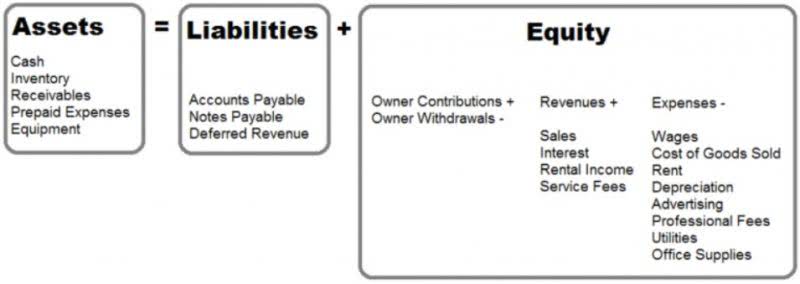
Different types of accounting variables are treated differently in T accounts. Some variables’ values increase on the debit side, while some are on the credit side. So, thoroughly go through this section to understand the treatment of different variables in the ledger accounts. Notice that the chart of accounts above is arranged in an order where assets are listed first, followed by liabilities, equity, revenue, and expense. This is also usually the order they are presented in the financial statements. The Cash in bank account normally has a debit balance at the beginning as illustrated in the T-account above.